How to Train a Senior Dog to Use a Ramp Safely
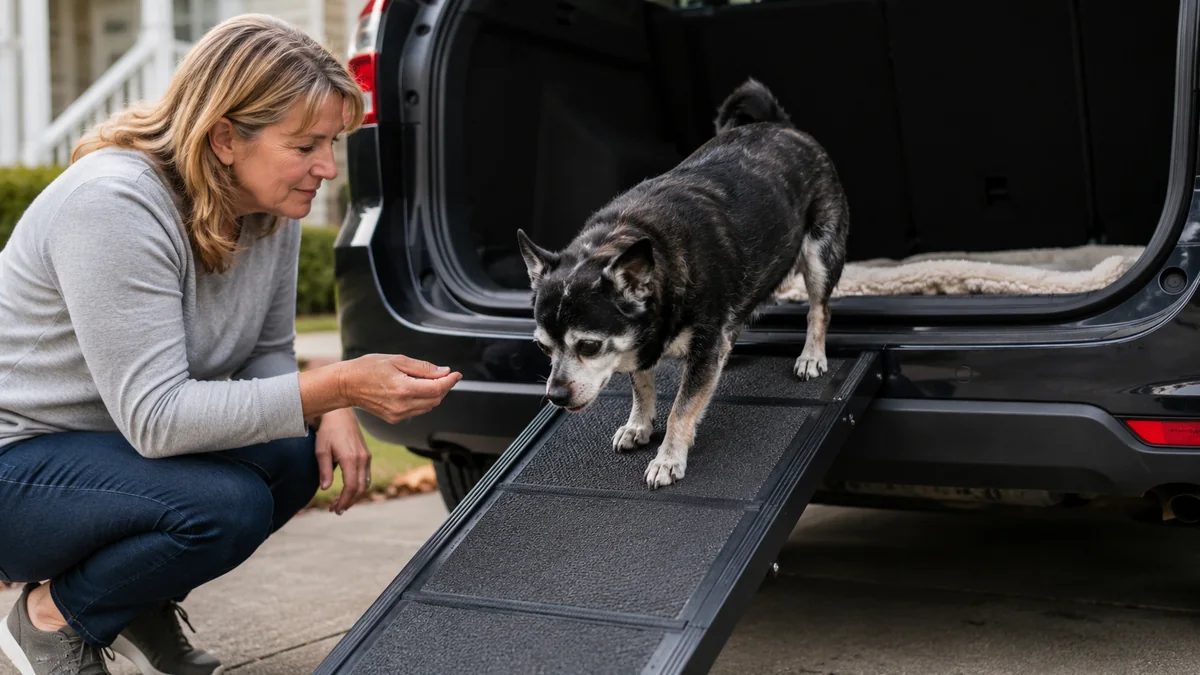
Teaching a senior dog to use a ramp safely can reduce the strain caused by jumping into a car, climbing onto furniture, or reaching other raised surfaces. Older dogs with arthritis, hip dysplasia, weakness, or balance problems may need extra time to feel secure on a new ramp.
This guide explains how to introduce the ramp gradually, build confidence with positive reinforcement, increase the incline safely, and avoid common training mistakes. The goal is not to force your dog onto the ramp, but to help them use it calmly and confidently at their own pace.
Why Older Dogs Benefit From Using a Ramp
Jumping into a vehicle or onto furniture places extra force on a dog’s hips, knees, spine, and other joints. For older dogs with arthritis, weakness, hip dysplasia, or balance problems, even a short jump can cause discomfort or increase the risk of a fall.
A stable ramp can help your dog reach elevated areas with less impact on sore joints. It may also allow your senior dog to remain more independent instead of waiting to be lifted each time.
Not every dog needs the same mobility aid. Read our Dog Ramp vs Stairs guide if you are deciding which option is safer for your dog’s size, strength, and mobility.
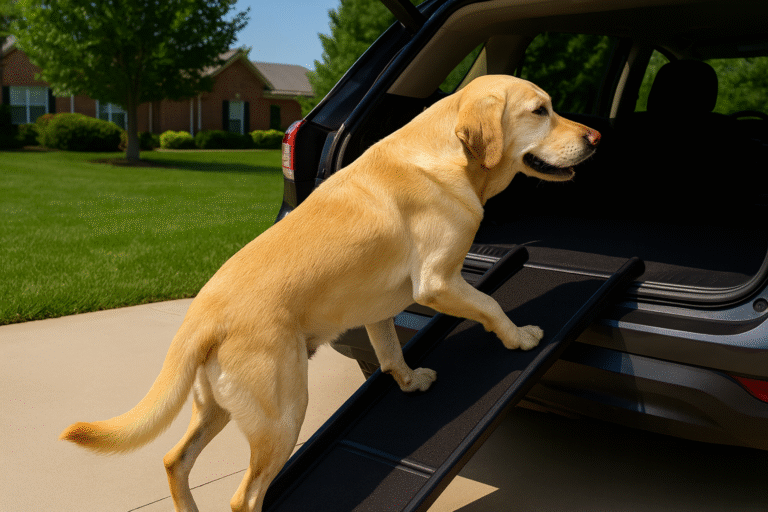
For ramps designed for getting into vehicles, see our guide to the Best Dog Ramps for SUVs and Trucks (Large Breeds)
Step 1: Choose a Safe Ramp for Your Senior Dog
Before training begins, make sure the ramp is appropriate for your dog’s size, strength, and mobility. A ramp that feels unstable, narrow, slippery, or too steep can make an older dog afraid to use it.
Look for:
- A non-slip walking surface that provides secure traction.
- A gentle incline that does not require your dog to climb sharply.
- Enough width for your dog to walk without feeling crowded.
- A suitable weight capacity for your dog’s size.
- Stable construction that does not wobble or shift during use.
- Raised side edges or rails when extra guidance would help prevent stepping off the side.
For vehicle use, check that the ramp reaches the correct height without creating an overly steep angle.
PetSafe Folding Dog Ramp review for cars and SUVs
Step 2: Let Your Dog Explore the Ramp While It Is Flat
Place the ramp flat on the floor in a quiet, familiar area where your dog feels comfortable. Do not attach it to furniture or a vehicle yet.
Allow your dog to sniff the ramp and investigate it without pressure. You can place a few treats beside it and then on the surface to create a positive association.
Once your dog is relaxed near the ramp, encourage them to walk across it while it remains flat. Keep the ramp from sliding, and stay close enough to provide support without pulling or forcing your dog forward.
Practice in short sessions of a few minutes. Stop before your dog becomes tired, frustrated, or anxious.
Step 3: Build Confidence With Positive Reinforcement
Use small treats, calm praise, or a favorite toy to reward your dog for approaching and stepping onto the ramp.
Start by rewarding simple progress, such as:
- Looking at or sniffing the ramp
- Placing one paw on the surface
- Taking a few steps forward
- Walking across the entire ramp
Place treats along the center of the ramp rather than near the edges. This helps guide your dog in a straight line and reduces the chance of stepping off the side.
Never pull your dog across the ramp by the collar or leash. The goal is to make each training session feel safe and rewarding.
Step 4: Increase the Incline Gradually
Once your dog can walk across the flat ramp comfortably, raise one end only a few inches. Secure the ramp so it cannot slide, wobble, or shift.
Guide your dog up and down the low incline using treats and calm praise. Practice both directions because some senior dogs find walking down a ramp more difficult than walking up.
Increase the height gradually over several sessions. Do not move to a steeper angle until your dog can use the current incline without hesitating, slipping, or trying to jump off.
When you begin using the ramp with a couch, bed, or vehicle, make sure it is firmly attached and positioned at the gentlest practical angle.
Step 5: Keep Training Sessions Short and Consistent
Senior dogs learn at different speeds. Some may become comfortable with the ramp after a few sessions, while others may need several days or weeks of gradual practice.
Keep each training session short and end while your dog is still calm and engaged. Several brief sessions are usually more effective than one long session that causes fatigue or frustration.
Once your dog is comfortable using the ramp, practice regularly in the location where it will normally be used. Continue rewarding calm, controlled movement until using the ramp becomes part of your dog’s routine.
Never force your dog to continue if they freeze, try to escape, or appear uncomfortable. Return to an easier step and rebuild their confidence gradually.
Tips That Make Ramp Training Easier
- Provide gentle support when needed: A well-fitted mobility harness can help steady a weak or unbalanced senior dog without pulling them forward.
- Start early: Introduce the ramp before your dog’s mobility becomes severely limited. Learning is often easier before pain, weakness, or fear develops.
- Use one consistent cue: Choose a simple phrase such as “ramp” or “walk up” and use it each time.
- Prevent jumping around the ramp: Block access to the usual jumping route so your dog does not bypass the ramp.
- Keep the surface secure: Check the ramp before every use to make sure it is dry, stable, and firmly attached.
Common Ramp Training Mistakes to Avoid
- Forcing your dog onto the ramp: Pushing, pulling, or dragging can create fear and make future training more difficult.
- Starting with a steep incline: Begin with the ramp flat and increase the height only after your dog is comfortable.
- Allowing the ramp to wobble or slide: Even one unstable experience can cause a senior dog to lose confidence.
- Moving too quickly: Do not advance to the next step until your dog can complete the current one calmly.
- Skipping practice going down: Many dogs find descending more difficult than climbing up.
- Training for too long: Stop before your dog becomes tired, sore, frustrated, or anxious.
- Letting your dog jump around the ramp: Consistent ramp use helps build a safer habit.
If your dog becomes hesitant, return to the last step they completed confidently and progress more slowly.
What to Do If Your Senior Dog Refuses the Ramp
If your dog will not approach the ramp, return to an easier step. Place it flat on the floor and reward your dog for simply standing near it, sniffing it, or touching it with one paw.
Check whether the ramp is wobbling, making noise, or feels slippery under your dog’s feet. Fear may also come from pain, poor vision, weakness, or a previous fall rather than the ramp itself.
A well-fitted mobility harness can provide gentle balance support, but do not use it to pull your dog across the ramp. If your dog suddenly refuses a ramp they previously used, or shows signs of pain, speak with your veterinarian before continuing training.
Can Calming Beds Really Help Dog Anxiety?
Frequently Asked Questions
How long does it take to train a senior dog to use a ramp?
Some dogs become comfortable within a few short sessions, while others may need several days or weeks. Progress depends on your dog’s confidence, mobility, past experiences, and whether the ramp feels stable and secure.
Should I use treats to teach my dog to use a ramp?
Yes. Small treats can reward your dog for approaching, stepping onto, and walking across the ramp. Place treats near the center of the walking surface so your dog moves straight rather than toward the edge.
Is walking down a ramp harder for senior dogs?
It can be. Walking downhill requires balance and controlled movement, which may be difficult for dogs with weak legs, arthritis, or poor coordination. Practice descending at a very low incline before moving to the ramp’s full height.
What should I do if my dog slips on the ramp?
Stop the training session and check the ramp’s surface, angle, and stability. Lower the incline and make sure the walking surface is clean and dry. Do not continue at the same height until your dog can walk across confidently without slipping.
Final Thoughts
Teaching a senior dog to use a ramp safely takes patience, repetition, and a stable setup. Begin with the ramp flat, reward small signs of progress, and increase the incline only when your dog is moving comfortably and confidently.
A ramp should reduce strain, not create another source of fear or instability. Watch your dog’s movement closely, keep sessions short, and return to an easier step whenever they hesitate, slip, or appear uncomfortable.
A Practical Ramp Option for Cars and SUVs
For helping an older dog get into a car or SUV, the PetSafe Folding Dog Ramp is a practical option to compare. It folds for storage, is lightweight enough for travel, and provides a textured walking surface for traction.
Related Senior Dog Mobility Resources
For more ways to reduce strain and improve your older dog’s comfort, read our Dog Arthritis Sleep Tips guide.
The American Kennel Club also provides general guidance about caring for senior dogs as their mobility and daily needs change.