Dog Ramp vs Stairs: What’s Best for Small Breeds?

Dog ramp vs stairs is a common question for small breed dog owners. If your dog struggles to jump onto the couch, bed, or car seat, repeated impact can put unnecessary strain on their joints and spine over time.
Dog ramps and dog stairs are the two most common solutions, but the right choice depends on your dog’s age, mobility, and comfort level.
In this guide, we’ll compare both options so you can choose the safest fit for your pup.
Want to help your dog sleep more comfortably too? Read our guide to joint-supportive sleep solutions for dogs.
Why Small Breeds Need Support
Even though small dogs look agile, constant jumping takes a toll. Dachshunds, Yorkies, Chihuahuas, and similar breeds are especially prone to back or hip problems. Using a ramp or stairs reduces impact on their joints, helps prevent injury, and gives them confidence moving between surfaces.
Top 5 Dog Stairs for High Beds and Older Dogs
Dog Ramps: Pros and Cons
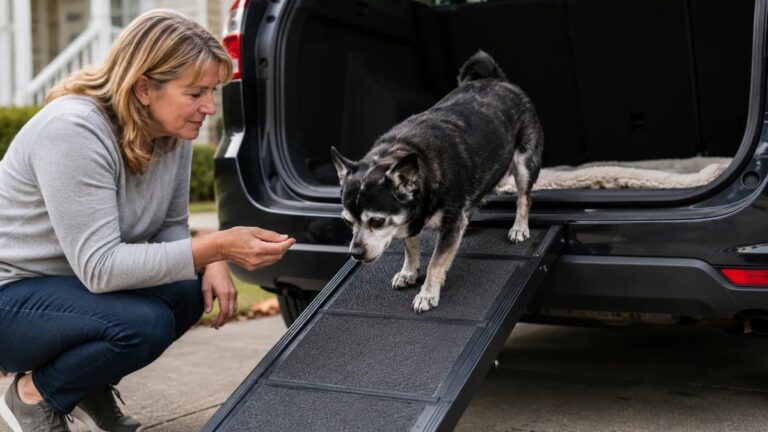
For senior dogs or small breeds with joint concerns, ramps are often the safer option.
Benefits of Dog Ramps
- Gentle incline reduces strain on joints.
- Great for mobility issues (arthritis, hip dysplasia).
- Works for multiple surfaces like couches, beds, and cars.
Downsides of Dog Ramps
- Require more floor space compared to stairs.
- Some small dogs may need training to feel comfortable.
- Can be heavier to move or store.
How to Train a Senior Dog to Use a Ramp Safely
Dog Stairs: Pros and Cons
For healthy, agile small dogs, stairs can be a practical space-saving choice.
Benefits of Dog Stairs
- Compact design fits easily in small spaces.
- Lightweight and portable — easy to move from room to room.
- Often less expensive than ramps.
Downsides of Dog Stairs
- Steeper angle may still stress joints.
- Not ideal for dogs with arthritis or weak legs.
- Some dogs refuse stairs after negative experiences.
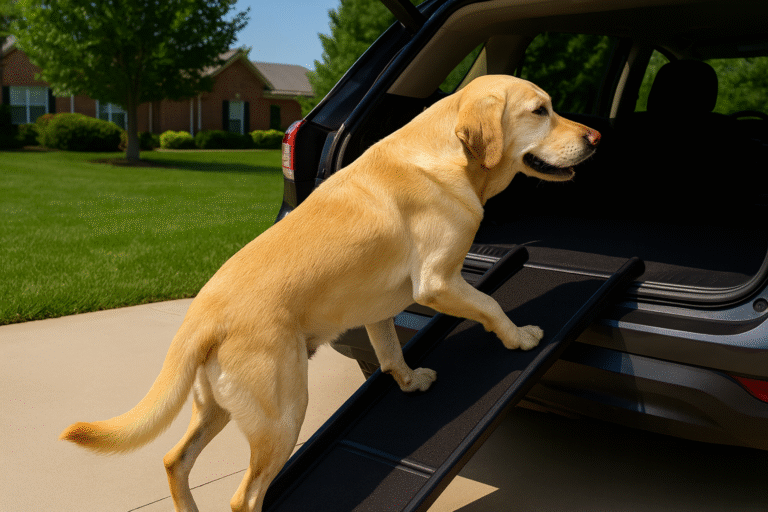
PetSafe Folding Dog Ramp review for cars and SUVs
Key Factors to Consider
When deciding between a dog ramp vs stairs, think about:
- Your dog’s health: Arthritic dogs or those with mobility issues usually do better with ramps.
- Space available: Stairs work well in small rooms; ramps need more length.
- Portability: If you travel, folding ramps may be more practical.
- Training & comfort: Some dogs naturally take to stairs, others prefer ramps.
Tip: Try both if possible — many pet owners find their dog shows a clear preference after testing.
Training Your Dog to Use a Ramp or Stairs
Whichever option you choose, introduce it slowly:
- Place the ramp or stairs flat on the floor first.
- Use treats or toys to encourage your dog to step on it.
- Gradually increase height and always reward success.
- Stay patient — small dogs often take a few days to adjust.
Dog Arthritis Sleep Tips: How to Help Your Senior Dog Rest Better at Night
Which is Best for Small Breeds?
For healthy young small dogs, stairs may be a convenient solution, especially if space is limited. But for senior pups, dogs with arthritis, or breeds prone to spine problems (like Dachshunds), ramps are usually the safer long-term choice. Many owners keep both depending on the location — stairs by the bed, ramp for the couch or car.
FAQ: Dog Ramp vs Stairs
Which is safer for small breeds?
Dog ramps are usually safer for breeds with fragile backs (like Dachshunds), while stairs may be fine for younger, agile small dogs.
What size ramp should I buy?
Choose a ramp long enough for a gentle incline. For couches, 30–40 inches is often enough; for beds, look for at least 40–50 inches.
Can puppies use ramps or stairs?
Yes! Training puppies early helps them avoid risky jumping habits and protects joints as they grow.
Final Thoughts
When comparing dog ramp vs stairs, the right choice depends on your dog’s age, health, and comfort. Ramps are best for seniors or breeds prone to back issues, while stairs may be fine for younger, agile pups.
Ready to help your dog jump more safely?
Whether you choose a ramp or stairs, the right product can make a huge difference in your dog’s safety and comfort.
Whichever you choose, introducing it with patience and positive reinforcement will help your small dog build safe, lasting habits. By protecting their joints now, you’ll give them more years of comfort and mobility.
For more guidance on canine joint health, the American Kennel Club – Joint Health in Dogs offers helpful information.