Senior Dog Mobility Assessment: 15 Signs Your Dog May Be Losing Mobility
Is your senior dog slowing down, struggling to stand, avoiding stairs, or sleeping more than usual?
Mobility changes often develop gradually, making them easy to overlook at first. Paying attention to everyday movement, comfort, and activity can help you notice changes worth discussing with your veterinarian.
This free senior dog mobility assessment is designed as an observation tool to help you organize what you’re seeing at home, including changes in standing, walking, stairs, sleep, and daily activity.
Important: This assessment is not a substitute for veterinary care. If your dog shows signs of pain, limping, weakness, or sudden mobility changes, consult your veterinarian promptly. You can also review mobility and senior pet care information from the American Veterinary Medical Association (AVMA).
Why Mobility Matters for Senior Dogs
As dogs age, natural wear and tear on joints, muscles, and connective tissues can make everyday activities more difficult. Arthritis, hip dysplasia, joint inflammation, muscle loss, and other age-related conditions often reduce mobility over time.
Early detection allows dog owners to make simple adjustments that may improve comfort, including:
- Orthopedic dog beds
- Dog ramps or stairs
- Joint support supplements
- Weight management
- Veterinary treatment plans
What Causes Mobility Decline in Senior Dogs?
Arthritis
Arthritis is one of the most common causes of mobility decline in older dogs. As joint cartilage wears down, inflammation and pain can make everyday activities such as standing, walking, climbing stairs, and lying down more difficult.
Hip Dysplasia
Hip dysplasia occurs when the hip joint does not fit together properly. Over time, this can lead to pain, stiffness, reduced range of motion, and difficulty getting up after rest.
Muscle Loss
Senior dogs naturally lose muscle mass as they age. Reduced muscle strength can make it harder to support joints, maintain balance, and move confidently around the home.
Excess Weight
Even a few extra pounds place additional stress on aging joints. Overweight dogs often experience increased stiffness, reduced endurance, and greater difficulty with mobility-related activities.
Neurological Conditions
Certain neurological conditions can affect coordination, balance, and muscle control. If you notice dragging paws, stumbling, weakness, or sudden mobility changes, contact your veterinarian for evaluation.
When to Speak With Your Veterinarian
If your dog’s mobility declines suddenly, or if they show signs of pain, limping, weakness, or difficulty standing, schedule a veterinary appointment. Early intervention often leads to better long-term outcomes and improved quality of life.
Senior Dog Mobility Observation Checklist
Use the questions below to note changes in your dog’s movement, comfort, and daily activity. There is nothing to total or calculate. For each item, jot down what you notice and whether the change is new, occasional, or becoming more frequent.
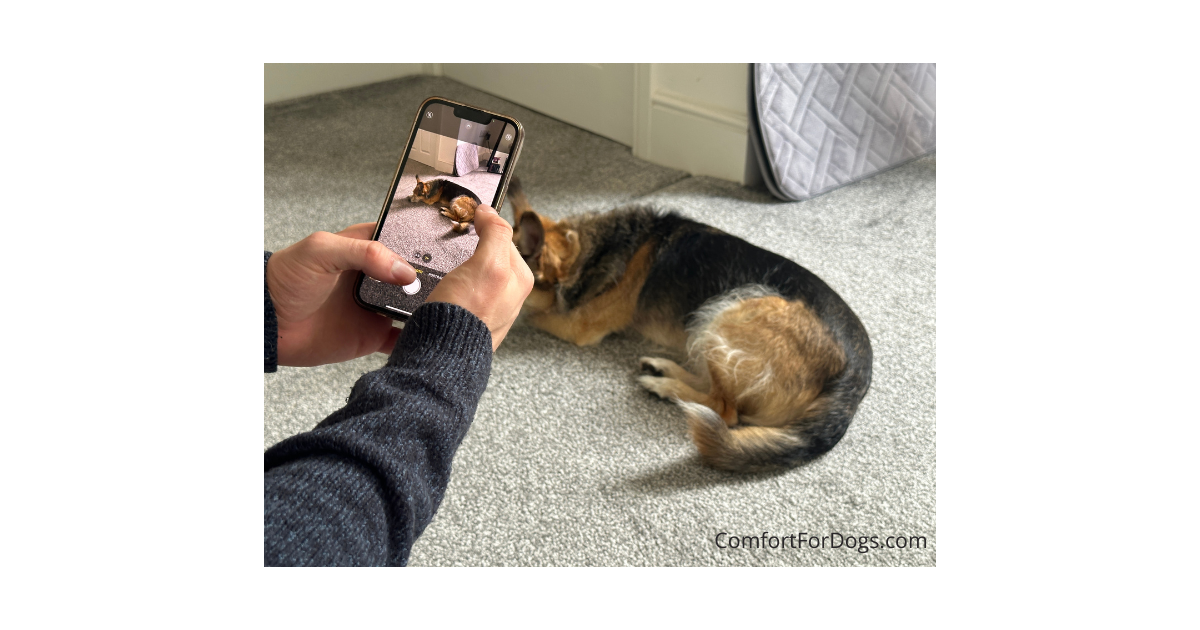
Want to track your dog’s mobility changes over time? Download our free printable Senior Dog Mobility Checklist using the button near the top of this page. It includes all 15 questions, checkboxes, and space for notes you can share with your veterinarian.
Standing & Rising
- Can your dog stand up from a lying position without assistance?
- Can your dog rise after sleeping without struggling?
- Does your dog avoid lying down because getting back up is difficult?
Walking & Movement
- Can your dog walk normally without limping?
- Can your dog complete a short walk without excessive fatigue?
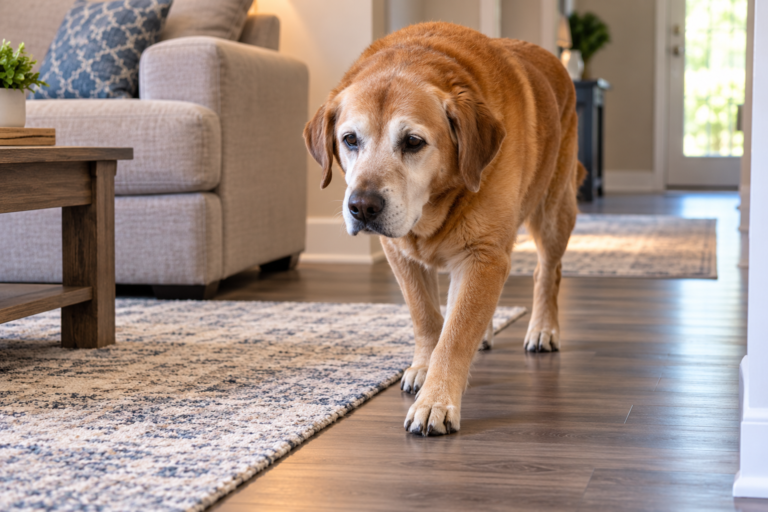
- Does your dog move confidently on slippery floors?
If your senior dog seems hesitant or walks slowly on smooth surfaces, read our guide on helping senior dogs walk more comfortably on hardwood floors for seven practical ways to improve traction and comfort at home.
Stairs & Elevation
- Can your dog climb stairs comfortably?
- Can your dog go down stairs without hesitation?
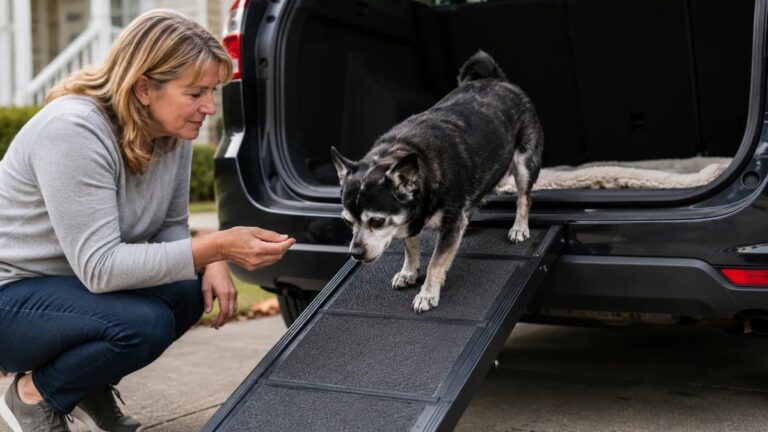
- Can your dog get into vehicles or onto furniture without assistance?
Daily Comfort
- Does your dog appear comfortable while resting?
- Does your dog sleep through the night without frequent repositioning?
- Does your dog avoid signs of stiffness after resting?
Activity Level
- Does your dog still enjoy walks?
- Does your dog willingly participate in normal daily activities?
- Does your dog show interest in play or interaction?
What to Do With Your Observations
There is no single number that can tell you whether your dog has a mobility problem. Instead, look for patterns and changes over time.
Pay particular attention to:
- New or worsening difficulty standing, walking, or using stairs
- Repeated limping, slipping, or weakness
- Changes in sleep or resting comfort
- Reduced interest in walks, play, or normal activities
- Changes that interfere with everyday movement
- Sudden mobility changes or signs of pain
Keeping notes about when these changes occur can help you give your veterinarian a clearer picture of what you are seeing at home.
Common Signs of Mobility Decline
Watch for these additional warning signs:
- Limping after rest
- Reluctance to jump
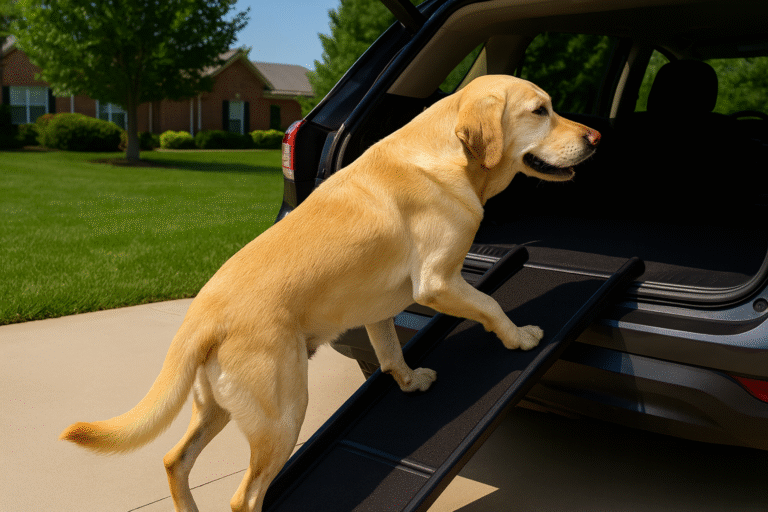
- Difficulty getting into vehicles
- Slower walking pace
- Frequent slipping
- Increased sleeping
- Restlessness at night
- Muscle loss in the hind legs
- Hesitation on stairs
If your dog is showing several of these warning signs, review our Dog Arthritis Checklist to identify common symptoms associated with joint pain, stiffness, and age-related mobility issues.
Ways to Improve Senior Dog Mobility
While every dog is different, many senior dogs benefit from:
Orthopedic Dog Beds
Supportive foam bedding helps reduce pressure on hips, elbows, and shoulders during rest.
If your dog struggles to settle at night, read our guide on how to help a dog with arthritis sleep better.
Dog Ramps and Stairs
Reducing repeated jumping can help protect aging joints.
Joint Support Supplements
Certain supplements may support joint health and mobility when recommended by your veterinarian.
Weight Management
Even a small amount of excess weight can place additional stress on painful joints.
Creating a dedicated senior dog rest area can also help improve comfort and reduce unnecessary strain on aging joints. Read our Senior Dog Rest Area guide for simple setup tips.
Regular Veterinary Care
Early intervention often provides the best outcomes for age-related mobility issues.
Related Reading
- Best Orthopedic Dog Beds for Senior Dogs With Joint Pain
- How to Help a Dog With Arthritis Sleep Better
- Best Sleeping Positions for Dogs With Joint Pain
- Best Dog Ramps for SUVs and Trucks
- Senior Dog Rest Area: Safe Setup Tips
Final Thoughts
Mobility changes are often one of the first things owners notice as a dog ages. Regularly observing how your dog stands, walks, rests, and participates in daily activities can make gradual changes easier to recognize.
If you notice persistent, worsening, or sudden mobility changes, consider discussing them with your veterinarian. Your notes from this checklist can help explain what you are seeing at home and when the changes occur.