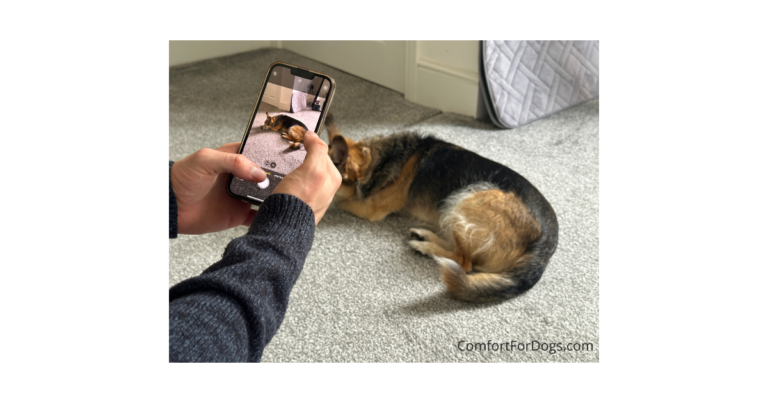
Senior Dog Walking Slowly on Hardwood Floors? 7 Ways to Help
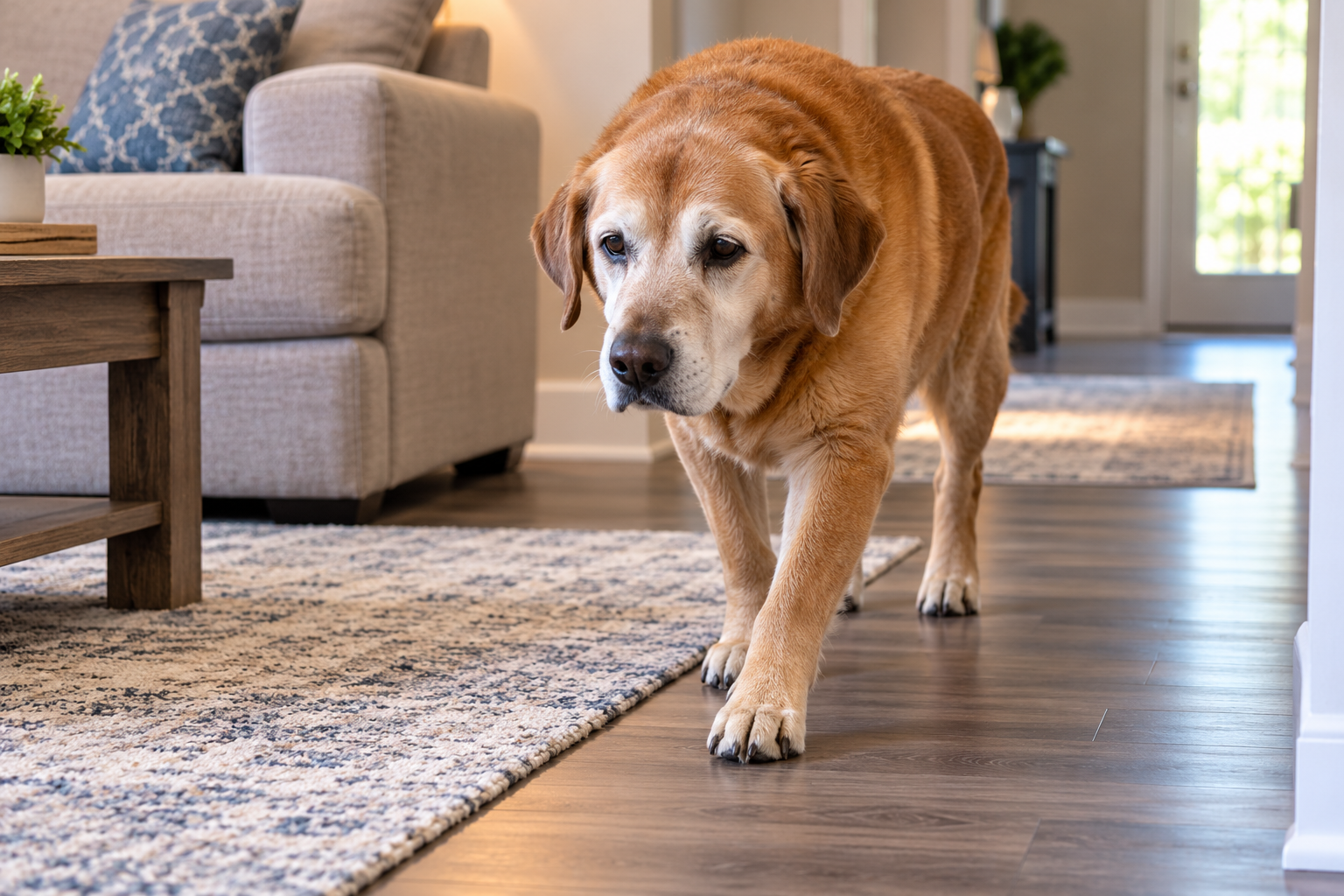
If your senior dog has started walking slowly or cautiously on hardwood, vinyl, or tile floors, you might wonder whether it’s arthritis, slippery flooring, or simply part of getting older.
Sometimes, it’s a combination of factors. Aging dogs can experience joint stiffness, muscle weakness, or changes in balance that make smooth surfaces more difficult to navigate. Even dogs that aren’t actually slipping may become hesitant about where they place their paws.
I’ve noticed this with my own senior dog, a large mixed breed weighing approximately 120 pounds. We believe he’s around 10 or 11 years old, although we don’t know his exact age or breed.
Our home has vinyl plank flooring that looks like hardwood. Over time, I’ve noticed that he walks noticeably slower on those floors than he does on carpet or grass. He doesn’t regularly slip, but he definitely seems more cautious on hard surfaces.
Through trial and error, we’ve made several small adjustments to help him move around our home more comfortably.
Here are seven practical ways to help your older dog navigate hard floors with greater confidence.
1. Keep your Senior Dog’s Nails Trimmed
Of all the things I’ve learned from caring for my senior dog, keeping his nails properly trimmed has been one of the most important.
Because our home has vinyl plank flooring, I can immediately tell when his nails are getting too long. Even when they’re only slightly overgrown, I can hear them tapping and sometimes dragging against the floor as he walks.
I’ve also noticed that he seems more comfortable walking around the house after I’ve trimmed them.
Long nails can interfere with how a dog’s paws contact the ground. This can make it harder to maintain secure footing, particularly on smooth surfaces.
According to VCA Animal Hospitals, keeping a dog’s nails short can improve traction and reduce strain on their joints. This is especially important for senior dogs dealing with arthritis or mobility difficulties.
For senior dogs already experiencing stiffness or mobility difficulties, proper nail maintenance may help make walking easier.
What You Can Do
- Check your dog’s nails regularly rather than waiting until they’re noticeably overgrown.
- Trim small amounts as needed, taking care to avoid the quick.
- Consider using a nail grinder to smooth rough edges after trimming.
- Ask a professional groomer or veterinarian for assistance if you’re unsure how short to trim the nails.
The ideal trimming schedule depends on your dog’s activity level, nail growth, and how quickly the nails naturally wear down.
What I Personally Use to Maintain My Senior Dog’s Nails
I start with regular manual dog nail clippers to shorten my dog’s nails. Once I’m finished clipping, I use the Casfuy 2-Speed Electric Dog Nail Grinder to smooth and shape the edges.
I’ve been extremely happy with this grinder.
It does an excellent job smoothing rough nail edges, and one of my favorite features is how quiet it is. The sound doesn’t seem to frighten my dog, which makes the grooming process much easier.
When I first introduced the grinder, I let him sniff and investigate it before attempting to use it. That’s something I try to do whenever we introduce him to anything unfamiliar.
Giving him that opportunity to become familiar with the grinder seemed to help him accept it.
I especially like combining manual clippers with the electric grinder because the clippers handle most of the nail length, while the grinder lets me finish the job and smooth everything out.
For anyone already using traditional nail clippers, a quiet electric grinder can be a useful finishing tool.
My experience: I personally own and use this nail grinder. My recommendation is based on how it has performed when grooming my senior dog.
2. Add Area Rugs and Non-Slip Runners
One interesting thing I’ve noticed about my dog is that he’ll sometimes take a longer route through our living room just to walk across our large area rug.
There’s a shorter path along the vinyl plank flooring leading toward our back door, but he often chooses to walk across the carpet instead.
I can’t say for certain why he makes that choice, but I suspect he feels more comfortable and secure walking on carpet.
Smooth flooring can be challenging for older dogs, particularly those experiencing joint stiffness, reduced strength, or balance difficulties.
Area rugs and runners can provide additional traction without requiring you to replace your flooring.
Where to Place Rugs and Runners
Consider adding secure rugs or runners in areas your dog uses most frequently:
- Between their bed and the door leading outside
- Along hallways and common walking paths
- Around their food and water bowls
- Near favorite resting spots
- At transitions between rooms
Choose rugs with non-slip backing or use an appropriate rug pad to keep them securely in place.
Avoid lightweight rugs that slide or bunch up when your dog steps onto them. Loose rugs can create additional slipping or tripping hazards.
You don’t necessarily need to cover every inch of hardwood or vinyl flooring.
Start by creating secure pathways between the places your dog uses most often.
Consider a Washable Non-Slip Runner
If you have long stretches of hardwood or vinyl flooring, a washable, low-profile runner with secure non-slip backing may be worth considering. Look for one that’s easy to clean, lies flat, and is suitable for your flooring type. For vinyl plank floors, check the flooring manufacturer’s recommendations because certain rug backings can cause discoloration.
A runner can help create a more secure pathway between your dog’s favorite resting spots, food and water bowls, and doors leading outside.
For more ideas on making your dog’s sleeping and walking areas safer, see our Senior Dog Rest Area Guide, which covers bedding, accessibility, and practical home adjustments.
3. Make It Easier for Your Dog to Get Out of Bed
Getting up after a long rest can be challenging for senior dogs, especially those experiencing joint stiffness.
My dog sleeps on an orthopedic memory foam bed every night.
As he’s gotten older, I’ve noticed that he takes longer to stand up, and his first few steps tend to be slow and careful.
One adjustment we’ve made is placing a large comforter over his bed and allowing it to extend approximately one to two feet onto the surrounding floor.
This gives him a fabric-covered surface to step onto when he first gets up.
It also provides another unexpected benefit.
Because he’s such a large dog, he likes to stretch and sprawl out while sleeping. Without the comforter, his toenails sometimes hit the hard flooring or nearby walls, creating tapping noises throughout the night.
The comforter helps cushion those areas and reduce the noise.
It’s a simple adjustment that’s worked well in our home.
A Few Things to Consider
If you’re using blankets or comforters around your dog’s bed, make sure they remain flat and don’t slide or bunch up.
A loose blanket that shifts under your dog’s paws could make walking more difficult.
For dogs that need additional stability, a secured non-slip mat or rug may be a better option.
It’s also worth considering the type of bed your senior dog uses.
A supportive orthopedic bed with an appropriate height may help make resting and getting up more comfortable.
If you’re comparing supportive sleeping options, see our guide to the Best Orthopedic Dog Beds for Senior Dogs.
4. Give Your Dog Better Footing While Eating and Drinking
Standing at food and water bowls might not seem like a demanding activity, but for senior dogs experiencing joint stiffness, remaining in one position can sometimes be uncomfortable.
We’ve placed a thick foam anti-fatigue mat in front of our dog’s food and water bowls.
Our goal is to give him a more cushioned surface to stand on while eating and drinking.
Although I can’t say for certain whether the mat reduces his discomfort, it’s another small adjustment we’ve made to accommodate his age and size.
We also have a couple of anti-fatigue mats in our kitchen, and we’ve noticed that he occasionally chooses to lie down and nap on them.
He seems to enjoy those softer surfaces.
If you’re considering a mat for your dog’s feeding area, look for one that:
- Stays securely in place
- Is large enough for your dog to stand with all four paws on it
- Has a stable surface that doesn’t compress excessively
- Is easy to clean after food or water spills
- Doesn’t curl or create raised edges that could cause tripping
For larger senior dogs, make sure the mat provides enough room for them to stand naturally without having to balance near the edges.
5. Pay Attention to How Your Dog Walks on Different Surfaces
One of the most noticeable things about my senior dog’s mobility is how differently he moves depending on the surface beneath his feet.
Inside our home, he walks slowly and carefully across the vinyl plank flooring.
When he goes outside, he continues moving cautiously across our concrete patio.
But once he steps onto the grass, his behavior changes considerably.
He begins walking faster, explores the yard, sniffs around, and generally seems more relaxed and playful.
It’s almost as though he feels more confident moving around on the grass.
However, I also recognize that he spends most of his time indoors, so some of that increased energy could simply come from the excitement of being outside.
I can’t say definitively that the grass is solely responsible for the difference.
What I can say is that his movement noticeably changes depending on where he’s walking.
What to Watch For
Pay attention to whether your senior dog:
- Walks more slowly on hardwood, vinyl, or tile than on carpet
- Hesitates before crossing smooth flooring
- Chooses carpeted pathways even when they require a longer route
- Moves cautiously during the first few steps after resting
- Appears less confident when turning or changing direction
- Walks more comfortably on grass or other textured surfaces
These observations can help you identify areas of your home where additional traction might be useful.
They can also provide helpful information to share with your veterinarian if you’re concerned about your dog’s mobility.
6. Consider Additional Traction Products if Needed
For some senior dogs, regular nail maintenance, area rugs, and secure mats may provide enough support.
Other dogs may benefit from additional traction products, particularly if they frequently slip or struggle to maintain their footing.
There are several options worth considering.
Non-Slip Dog Socks
Some dog socks feature rubberized grips designed to improve traction on hardwood, tile, and other smooth flooring.
They may be helpful for dogs that struggle to maintain their footing indoors.
However, proper fit is important.
Socks that slide, twist, or interfere with normal paw movement could create additional problems.
Not every dog will tolerate wearing them, either.
Dog Toe Grips
Dog toe grips are small devices fitted over individual toenails to provide additional traction on smooth surfaces.
They may be an option for dogs that have difficulty gripping hardwood or tile flooring.
However, they need to fit correctly and may not be appropriate for every dog.
Consult your veterinarian if your dog has significant mobility problems or you’re unsure whether toe grips would be suitable.
Paw-Friendly Traction Mats
Non-slip traction mats are another option for specific areas of your home.
They can be particularly useful around:
- Dog beds
- Doorways
- Feeding stations
- Common walking paths
- Other areas where your dog regularly hesitates
My personal experience: I haven’t used dog socks or toe grips with my senior dog.
So far, I’ve focused primarily on nail maintenance and providing more comfortable walking and resting surfaces throughout our home.
I prefer recommending those simple adjustments first, especially for dogs like mine that move cautiously but don’t regularly slip.
7. Don’t Assume Slower Walking Is Just Normal Aging
Although slippery flooring can contribute to mobility difficulties, slower walking isn’t always caused by poor traction.
Senior dogs may move more cautiously because of several underlying conditions, including:
- Arthritis and joint stiffness
- Muscle weakness
- Orthopedic injuries
- Neurological problems
- Changes in balance or coordination
- Pain or discomfort
My own dog takes longer to get up after resting and seems to need a little time to move more comfortably.
We’ve noticed these changes as he’s aged, but I wouldn’t automatically assume that everything is caused by arthritis or flooring.
Not sure whether your dog’s movement changes are becoming more concerning? Our free Senior Dog Mobility Assessment helps you identify and track common changes in standing, walking, and everyday activity.
If your senior dog begins walking differently, takes longer to stand, or seems uncomfortable moving around, it’s worth discussing those changes with your veterinarian.
A veterinary examination can help identify potential medical causes and determine whether treatment or additional support would be beneficial.
Seek prompt veterinary attention if your dog suddenly becomes weak, cannot stand, repeatedly falls, appears to be in severe pain, or begins dragging or knuckling their paws.
Improving traction around the home is helpful, but it shouldn’t replace identifying and addressing underlying mobility problems.
What Has Helped My Senior Dog Most?
After caring for a large senior dog in a home with mostly hard flooring, I’ve learned that sometimes the simplest adjustments can make the biggest practical difference.
My two biggest recommendations are:
1. Stay on top of nail trimming.
With our vinyl plank floors, I can immediately tell when my dog’s nails are getting too long.
Keeping them properly trimmed, then smoothing the edges with my Casfuy electric nail grinder, has become an important part of our routine.
I’ve consistently noticed that he seems more comfortable walking indoors when his nails are well maintained.
2. Provide secure, comfortable walking surfaces.
Our dog regularly chooses to walk across the living room rug rather than taking a shorter route over the vinyl flooring.
We’ve also made adjustments around his orthopedic bed and placed a cushioned mat near his food and water bowls.
None of these changes required expensive renovations or replacing our flooring.
They were simply things we tried after observing his habits and noticing where he seemed most comfortable.
One thing I’ve learned is that senior dogs don’t necessarily need to be visibly slipping before flooring becomes an issue.
Sometimes, cautious steps, hesitation, or consistently choosing softer surfaces can be signs that something about the environment deserves attention.
Frequently Asked Questions
Why Does My Senior Dog Walk Slowly on Hardwood Floors but Normally on Carpet?
Hardwood, vinyl, and tile floors can provide less traction than carpet, which may cause older dogs to walk more cautiously.
Joint stiffness, muscle weakness, discomfort, or reduced confidence may also contribute.
If your dog consistently walks better on carpet, consider providing secured rugs or runners while also discussing mobility changes with your veterinarian.
Can Long Nails Make Hardwood Floors Harder for Dogs to Walk On?
Yes. Overgrown nails can interfere with normal paw positioning and traction, particularly on smooth flooring.
Regular nail maintenance may help your dog maintain more secure footing.
Avoid cutting nails excessively short, and consult a groomer or veterinarian if you’re unsure about proper trimming.
What Is the Best Flooring for a Senior Dog With Arthritis?
Secure, non-slip flooring is generally preferable to slick surfaces for dogs experiencing mobility difficulties.
Low-profile carpeting, secured area rugs, and non-slip runners can be practical options.
The best solution depends on your dog’s individual mobility needs, comfort, and stability.
Are Dog Socks Necessary for Hardwood Floors?
Not necessarily.
Some dogs benefit from traction socks, while others do well with properly maintained nails and secure rugs or mats.
If you try dog socks, make sure they fit correctly and don’t slide or interfere with normal walking.
Why Does My Senior Dog Take Longer to Get Up After Sleeping?
Joint stiffness and arthritis can make standing after rest more difficult, but other orthopedic or neurological conditions can cause similar symptoms.
If your dog is regularly struggling to stand, appears uncomfortable, or develops worsening mobility problems, schedule a veterinary examination.
Final Thoughts
When your senior dog starts walking slowly or cautiously on hardwood or vinyl floors, it’s worth paying attention.
Sometimes, small changes around the house can make everyday movement easier.
Keeping nails trimmed, adding secure rugs and runners, and providing comfortable surfaces around sleeping and feeding areas are practical places to start.
For our family, one of the biggest lessons has been learning to observe what our dog naturally prefers.
When he chooses carpet over vinyl flooring, takes a few cautious steps after getting up, or seems more comfortable walking on grass, those are behaviors worth noticing.
You don’t necessarily need to change your entire home.
Start with the areas your dog uses most frequently, make thoughtful adjustments, and pay attention to how they respond.
And remember, while improving traction can help make your home more senior-dog-friendly, persistent or worsening mobility problems deserve veterinary attention.