Best Sleeping Positions for Dogs in Pain: Joint Pain & Arthritis Guide
If your dog seems stiff, sore, or uncomfortable at night, their sleeping position can sometimes make joint pain worse or help relieve pressure. Dogs with arthritis, hip discomfort, back soreness, or age-related stiffness often need a supportive sleep setup that lets their body rest without twisting the spine or overloading the hips, elbows, or shoulders.
In this guide, we’ll cover the best sleeping positions for dogs in pain, which positions to watch carefully, and how to make your dog’s bed more comfortable for joint support.
Best Dog Sleeping Position When in Pain (Quick Answer)
The best sleeping position for dogs with joint pain is the side sleeping position, as it keeps the spine aligned and distributes weight evenly across the body. This position reduces pressure on the hips, elbows, and joints, making it ideal for dogs with arthritis or stiffness. That said, every dog is different, and a sudden change in sleeping position can be a sign that your dog is uncomfortable or needs a vet check.
Why Dog Sleeping Positions Matter When a Dog Is in Pain
When a dog is sore, stiff, or dealing with arthritis, the way they sleep can affect how much pressure builds on the hips, elbows, shoulders, and spine overnight. When dogs sleep in a way that overextends the hips, twists the spine, or loads elbows unevenly, inflammation can build and morning stiffness follows. Supportive beds + better dog sleeping positions help distribute weight evenly, protect bony points, and keep the back aligned. If your dog needs better support, switching to one of the best orthopedic dog beds for senior dogs with joint pain can make a big difference.
For larger senior dogs that need deeper cushioning, the KOPEKS Orthopedic Memory Foam Dog Bed is a strong option to compare because it offers a thick memory foam base, built-in pillow/headrest, waterproof inner liner, removable cover, and anti-slip bottom.
For a broader sleep setup, you may also want to read my dog arthritis sleep tips guide for ways to reduce stiffness and help your senior dog rest more comfortably at night.
Best Dog Sleeping Positions for Joint Pain
1) Side sleeper (most recommended)
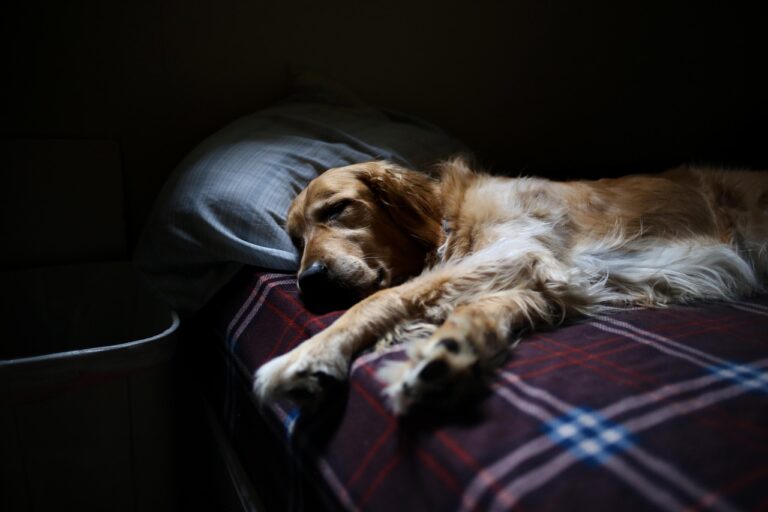
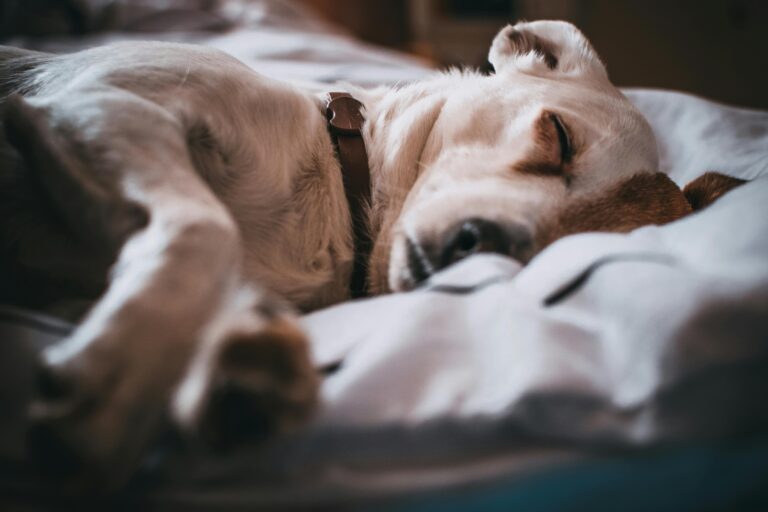
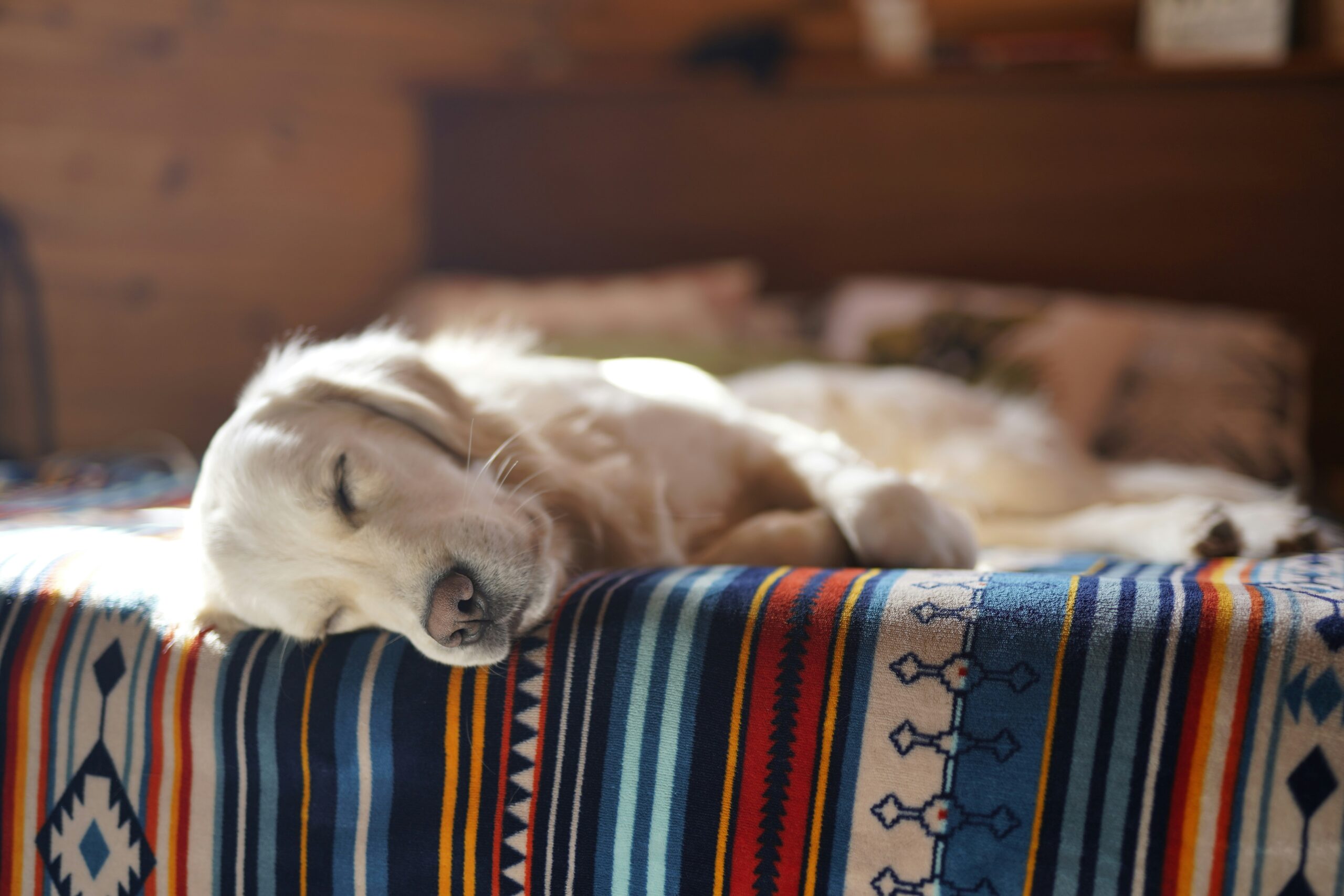
A side sleeping position is usually the best option for dogs with joint pain because it keeps the body more naturally aligned and spreads pressure across a larger surface. This keeps the spine neutral and spreads body weight across the rib cage and shoulder/hip on the down side. Pair with a memory-foam orthopedic bed to minimize pressure on the shoulder and hip. This is the best sleeping position for dogs with joint pain because it keeps the body aligned and reduces pressure on sensitive joints.
A high-quality orthopedic bed helps maintain proper alignment and reduces pressure buildup overnight.
2) Sprawled out / “Superman”
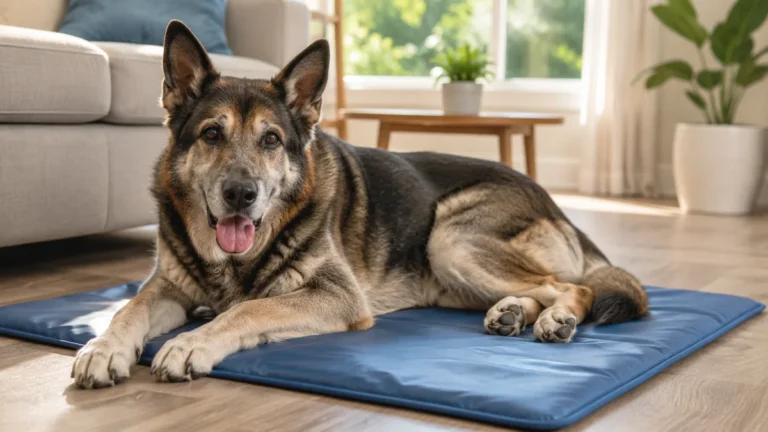
Front legs forward, back legs behind, belly on the bed. Great for cooling and for large breeds because weight is shared across more surface area. A flat, supportive surface helps the hips rest without being tucked.
3) Curled up / “Donut”
Dogs curl nose to tail to feel warm and safe. It’s fine for many pups, but if your dog has tight hips or sore elbows, long hours in a tight curl can compress joints. Choose a bolstered bed with room to stretch so your dog can shift from curl → side sleeper during the night.
4) Back sleeper / “Belly up”
Relaxed and adorable—often a sign your dog feels safe. However, for dogs with lumbar discomfort, this can accentuate a sway-back. Occasional is okay; encourage side sleeping for longer stretches.
5) Sphinx / “Loaf”
Chest down, back legs tucked, head up or on a bolster. Good for short naps, but not ideal overnight because it loads elbows and wrists. Offer a bolster so the head can rest and the front joints de-load.
6) Elevated bolster nest
Many seniors prefer a bed with supportive sides to lean on. This lets them adopt side sleep while propping the spine and neck in a neutral line. Among dog sleeping positions, this hybrid “side + bolster” combo is one of the easiest for stiff dogs to maintain comfortably.
Tip: After a quick evening walk, gently guide your dog into side sleep on an orthopedic surface and reward with calm praise. Small habits shift dog sleeping positions over time.
How Do Dogs Lay When They Are in Pain?
Dogs in pain may change sleeping positions often, curl up tighter than usual, avoid lying on one side, or struggle to get fully comfortable. Some dogs may sleep more upright, stay in a sphinx or loaf position, or keep shifting because one hip, elbow, or shoulder feels sore.
A sleeping position alone does not prove your dog is in pain, but it can be a clue when it appears with other signs like stiffness, limping, reluctance to jump, trouble standing up, whining, or reduced interest in walks.
If your dog suddenly changes how they sleep, seems restless at night, or avoids positions they used to enjoy, it is worth watching closely and checking with your veterinarian.
Best Calming Dog Beds for Anxious Pups in 2026 (great for dogs who won’t settle)
How to Help a Dog Sleep More Comfortably With Joint Pain
- Choose the right surface. Orthopedic memory foam distributes weight and keeps joints from sinking to the floor. (Egg-crate only adds airflow; it’s not the same support.)
- Size the bed correctly. Your pup should stretch fully without paws or hips hanging off—cramped beds force poor dog sleeping positions.
- Use bolsters wisely. A supportive edge lets side sleepers prop the neck and keeps the spine straight.
- Control temperature. Overheated dogs sprawl awkwardly; chilled seniors curl too tightly. Keep the sleep zone comfy.
- Add warmth for arthritis in winter. Heated pads can relax muscles so side sleeping feels better. See our guide to the best heated dog pads for dogs for top-rated options.
- Reduce jumping strain. Ramps or stairs prevent nightly flare-ups that undo progress you make with better dog sleeping positions.
- Evening routine. Short walk, gentle massage, then lead your dog onto the bed in side position and mark with praise or a low-cal treat.
Not sure how much your dog’s mobility has changed over time? Take our free Senior Dog Mobility Assessment to identify early signs of stiffness, joint discomfort, and mobility decline.
Best Heated Dog Pads for Cold Winter Nights
Top 5 Dog Stairs for High Beds and Older Dogs
How to Train a Senior Dog to Use a Ramp Safely
Dog Sleeping Positions When Sick vs. In Pain
A sick dog may sleep more than usual, hide, curl tightly, or choose quiet areas away from normal household activity. A dog with joint pain may still act alert but struggle to settle, shift positions often, or avoid putting weight on one side of the body.
The difference is not always obvious. If your dog’s sleeping position changes suddenly, or if it comes with appetite changes, vomiting, weakness, heavy panting, crying, or trouble standing, contact your veterinarian.
For senior dogs, nighttime restlessness often has more than one cause. Joint pain, anxiety, temperature, mattress support, and mobility changes can all affect how well they sleep.
Dog Sleeping Positions to Watch Carefully
- Tight curl all night: Can compress hips and elbows; fine for part of the night but encourage stretching to a side sleeper.
- Twisted spine (front half one way, back half the other): Cute, but prolonged twisting can irritate the lower back.
- Elbow-loaded loaf for hours: Elevate the chest on a pillow/bolster or encourage a shift to side sleeping.
If pain or stiffness persists despite improving dog sleeping positions, speak with your veterinarian about joint supplements, weight management, and a tailored exercise plan.
Some dogs may benefit from ingredients such as glucosamine, chondroitin, omega-3 fatty acids, and green-lipped mussel. Read our guide to the best joint supplements for senior dogs to learn which options may help support mobility and long-term joint health.
American Kennel Club – Arthritis in Dogs
Quick checklist to optimize sleep tonight
- Orthopedic foam bed sized to your dog
- Bolster or pillow for neck support
- Room temperature comfortable (not too hot/cold)
- Guide into side sleeper and reward
- Ramps/stairs to bed or couch to prevent flare-ups
- Track which dog sleeping positions your pup chooses and adjust the setup weekly
Upgrade Your Dog’s Sleep Setup
The right orthopedic bed can make a noticeable difference in comfort, mobility, and overall sleep quality. For larger senior dogs, KOPEKS is the better current product to compare here while PetFusion availability is limited.
Common Questions About Dog Sleeping Positions and Pain
What is the best sleeping position for a dog with joint pain?
Side sleeping is usually the best sleeping position for a dog with joint pain because it keeps the spine more neutral and reduces pressure on the hips, elbows, and shoulders. A supportive orthopedic bed can make this position more comfortable.
Why does my dog keep changing sleeping positions?
A dog may keep changing sleeping positions because they are too warm, too cold, anxious, uncomfortable, or dealing with sore joints. If the behavior is new or happens with stiffness, limping, or trouble standing, it may be related to pain.
Is curling up bad for dogs with arthritis?
Curling up is not always bad, but staying tightly curled for long periods can put extra pressure on stiff hips, elbows, or the spine. If your dog has arthritis, it helps to give them enough bed space to stretch into a side sleeping position.
How can I tell if my dog is sleeping differently because of pain?
Watch for changes such as restlessness, avoiding one side, trouble getting up, limping after naps, whining, panting, or needing more time to settle. Sleeping position alone does not confirm pain, but it can be part of the bigger picture.
Final Thoughts
The best sleeping position for dogs in pain is usually side sleeping on a supportive surface. It helps keep the body aligned, reduces pressure on sore joints, and gives older dogs more room to relax instead of staying tightly curled all night.
Small changes can make a big difference. A better bed, more room to stretch, gentle evening movement, and less jumping before bedtime can all help your dog rest more comfortably. If your dog’s sleep changes suddenly or pain signs continue, check with your veterinarian.